
🔧 Introduction
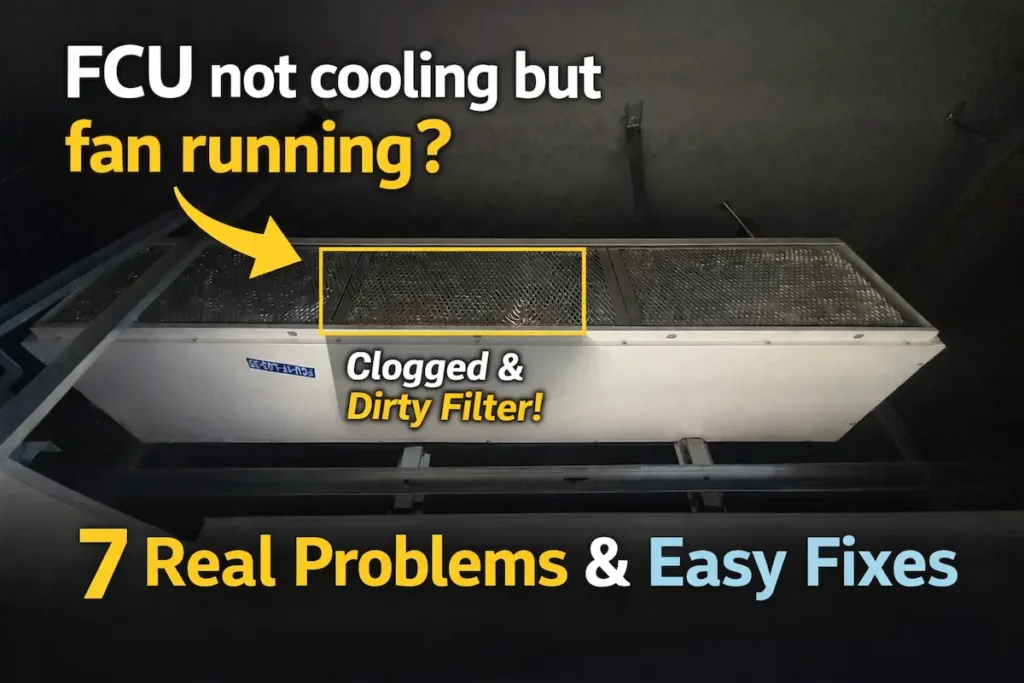
If your FCU (Fan Coil Unit) is not cooling but the fan is running, don’t panic this is one of the most common HVAC issues in facility management.
From my 10+ years of experience in commercial buildings, schools, and offices, I can confidently say:
👉 In 80% of cases, the problem is simple and fixable within 20–30 minutes.
Most technicians assume complex faults, but the real issue is usually:
- Airflow restriction
- No chilled water flow
- Control or thermostat issue
This guide explains step-by-step troubleshooting, based on real site experience and aligned with ASHRAE best practices.
🔍 Step-by-Step Troubleshooting (Real FM Practice)
1️⃣ Dirty Air Filter (Most Common Cause)
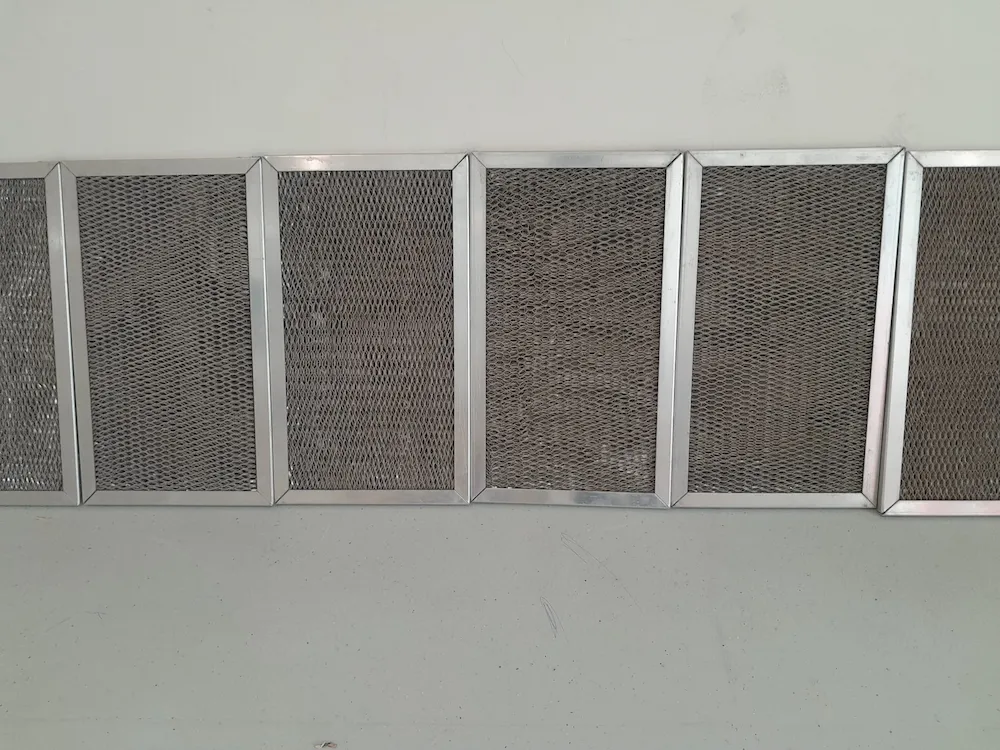
A clogged filter blocks airflow → cooling cannot reach the room.
🔧 What to Do:
- Remove filter
- Wash with water
- Dry completely before reinstall
📘 ASHRAE Reference:
ASHRAE Standard 62.1 emphasizes proper filtration and airflow for indoor air quality and system efficiency.
2️⃣ No Chilled Water Flow
If the pipe is not cold → no cooling is happening.
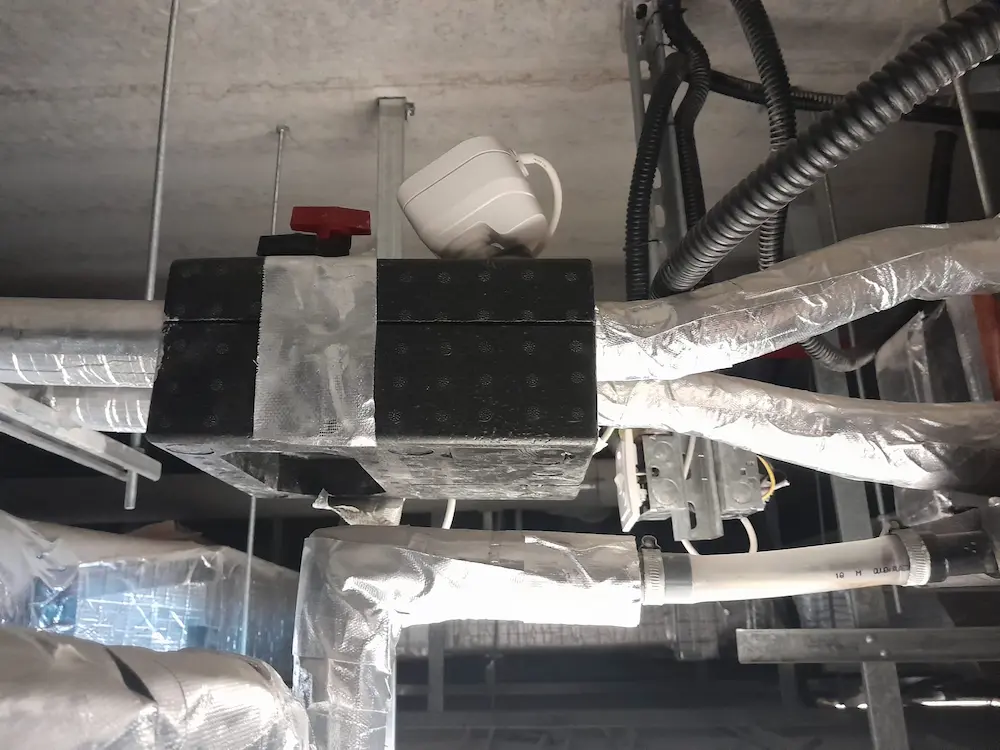
🔧 Check:
- Control valve operation
- Actuator signal
- Water flow in line
📘 ASHRAE Insight:
From ASHRAE, proper chilled water circulation is critical for heat transfer efficiency.
3️⃣ Air Lock in FCU Line (Hidden Issue)
Air trapped inside piping blocks water circulation.
🔧 Fix:
- Open air vent
- Release trapped air
👉 Cooling often restores immediately.
📘 ASHRAE Practice:
Hydronic systems must be properly vented to prevent flow restrictions and inefficiency.
4️⃣ Thermostat Fault or Wrong Setting
Sometimes the system is working but control is incorrect.
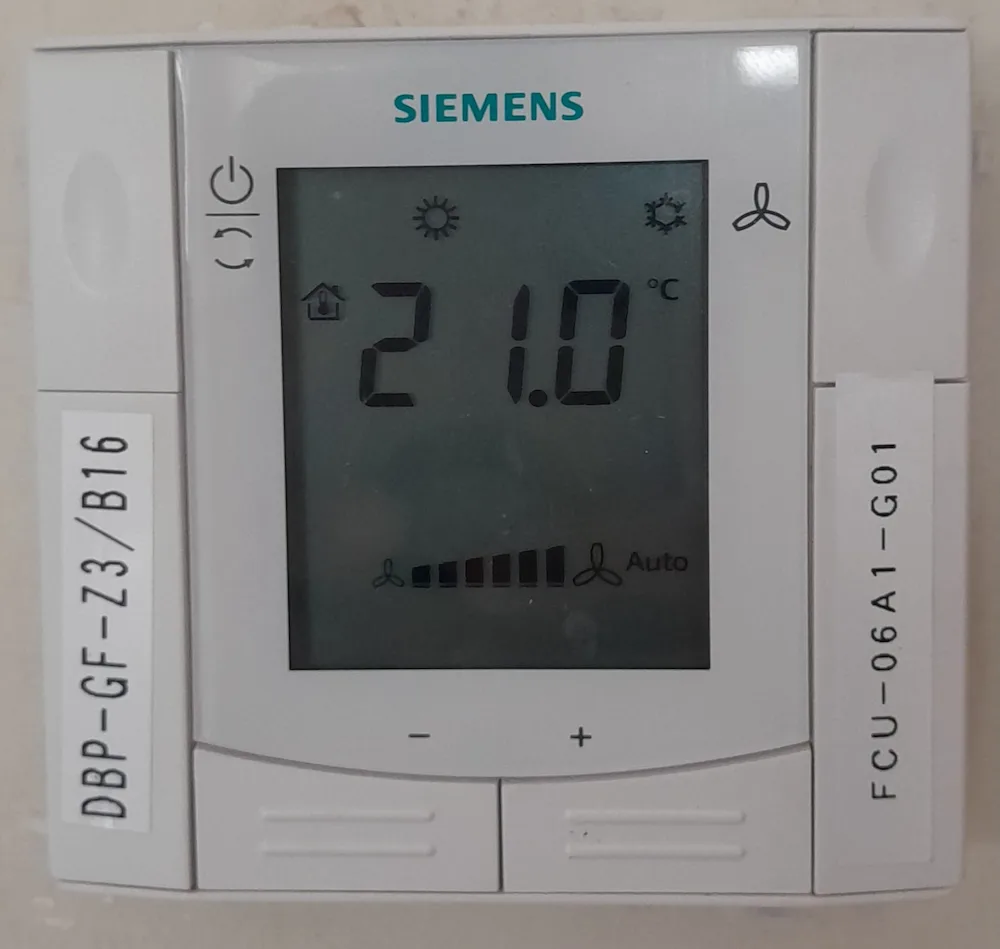
🔧 Fix:
- Replace batteries
- Check temperature setting
- Test with another thermostat
📘 ASHRAE Reference:
ASHRAE Standard 55 focuses on thermal comfort and proper temperature control.
5️⃣ Low Airflow or Blower Issue
Even with cooling available, poor airflow reduces performance.
🔧 Check:
- Blower motor
- Return air path
- Duct blockage
📘 ASHRAE Guidance:
Proper air distribution is essential for effective cooling and occupant comfort.
6️⃣ Dirty Cooling Coil
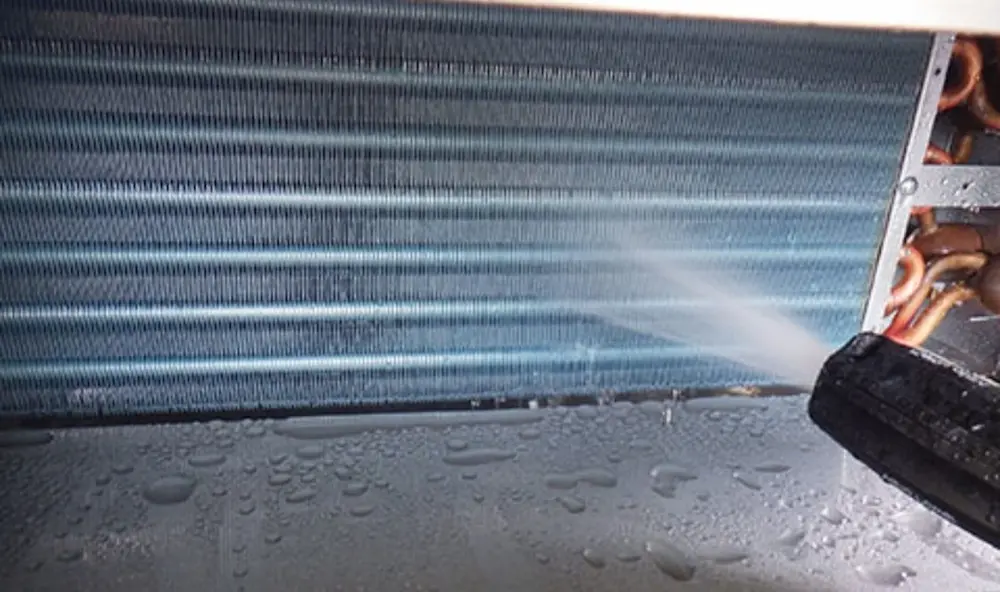
Dust and dirt reduce heat transfer efficiency.
🔧 Solution:
- Clean coil using chemical or water wash
📘 ASHRAE Insight:
Clean coils significantly improve system efficiency and cooling capacity.
7️⃣ Blocked Drain Line
Water accumulation increases humidity and reduces cooling efficiency.
🔧 Fix:
- Flush drain line
- Clean drain tray
🛠️ Best Troubleshooting Sequence (Time Saving)
Follow this order:
- Thermostat
- Air filter
- Airflow
- Chilled water
- Air lock
- Valve
- Drain
👉 This reduces diagnosis time by up to 50%.
🏢Real Site Experience
In one school project, 3 FCUs stopped cooling simultaneously.
After checking:
- ✔ Filters — OK
- ✔ Thermostats — OK
- ✔ Airflow — OK
👉 Root cause: Air lock in chilled water line.
After venting:
- Cooling restored instantly
- No spare parts required
🔗Related Reading
👉 AHU Not Cooling? Step-by-Step Troubleshooting Guide
👉 AHU Preventive Maintenance Checklist (Daily, Weekly, Monthly Guide)
👉 Recommended external reading:
- ASHRAE Handbook – HVAC Systems & Equipment
- ASHRAE Standard 62.1 (Ventilation)
- ASHRAE Standard 55 (Thermal Comfort)
- Fcu Not Cooling -Hantherm Blog
❓FAQ
Why is my FCU not cooling but fan running?
Because of airflow restriction or lack of chilled water flow.
What is the first thing to check?
👉 Air filter (most common issue)
Is this a major fault?
❌ No usually minor and easy to fix.
💡 Practical Maintenance Tips
- Clean filters monthly
- Check chilled water flow regularly
- Perform preventive maintenance
- Do not ignore airflow issues
✅ Conclusion
If your FCU is running but not cooling, the issue is usually simple:
✔ Dirty filter
✔ Airflow restriction
✔ Water flow issue
👉 Follow a proper troubleshooting sequence and you can fix most problems quickly without major repairs.
👨🔧Author Bio
Aves Shaikh
Facility Management Specialist
Aves Shaikh is a facility management professional with 10+ years of hands-on experience in HVAC systems, including FCU, AHU, and chilled water systems in commercial buildings, schools, and large facilities.
He specializes in practical troubleshooting, preventive maintenance, and energy-efficient HVAC solutions, following industry standards such as ASHRAE.
His goal is to simplify technical problems into easy, real-world solutions for technicians, engineers, and beginners.